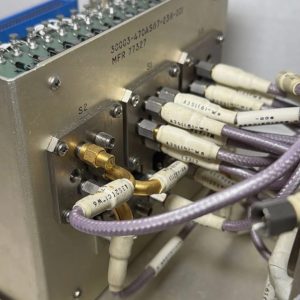
The Aviation Switching Module – NSN 4920-01-250-2696 (AS-IS / Untested) is a specialized aerospace electrical component offered for professional evaluation, restoration, testing, parts recovery, collection, or another suitable non-assumed application.
An Aircraft Switching Module and Aerospace Switching Module should be treated as specialized equipment rather than universal components that can be connected to any aircraft electrical system.
The Aircraft Electrical Switching Module may route selected circuits, while the Aviation Electrical Control Module, Aircraft Power Switching Module, Aerospace Electrical Control Unit, and Aircraft Signal Switching Module terms should not be interpreted as confirmed functions without documentation.
Accurate use of Aviation Control Module, Aircraft Electronic Switching System, Aerospace Switching Unit, and Aircraft Electrical Module terminology improves SEO without creating unsupported functional claims.
Understanding NSN 4920-01-250-2696
Accurate NSN verification helps reduce purchasing errors and prevents an unrelated module from being represented as compatible equipment.
Military or aviation-surplus components may carry replacement numbers, superseded numbers, modification markings, or contract identifiers that assist research.
Evaluating Surplus Aircraft Electronics
Internal faults, missing components, damaged wiring, corrosion, previous modification, storage deterioration, or electrical failure may be present even when the exterior appears clean.
Bench testing should begin only after technical documentation, circuit protection, connector identification, and safe power requirements are established.
Aircraft Circuit Selection Equipment
An Aircraft Switching Module may provide circuit selection, signal routing, controlled connection, isolation, mode selection, or interface functions within compatible aviation equipment.
Each visible feature should be photographed and described without assuming its electrical purpose.
Aerospace Switching Module Construction
The enclosure should be inspected for dents, cracks, corrosion, missing screws, altered holes, broken seals, and unauthorized repairs.
Unknown connectors should not be forced into visually similar plugs.
Electrical Switching Module Condition
External condition cannot confirm the state of hidden relays, contacts, circuit boards, wiring, or internal components.
Loose wires, nonstandard components, replaced relays, cut conductors, or evidence of field repair should be recorded.
Aircraft Electrical Control Applications
An Aviation Electrical Control Module can coordinate or select electrical functions within a compatible aviation or support-equipment system, depending on its documented design.
Control labels and switch legends can provide useful clues, but they should not be used as the only source of technical identification.
Aviation Power Circuit Management
A switch that moves normally may still contain burned, corroded, welded, or high-resistance electrical contacts.
A module with unknown electrical condition should remain clearly labeled as untested until formal evaluation occurs.
Aerospace Module Troubleshooting
Visual inspection, continuity checks, insulation review, component identification, and controlled testing may form part of a professional evaluation.
Undocumented modifications can make future troubleshooting and identification more difficult.
Aviation Signal Routing Equipment
Signal circuits can be sensitive to grounding, shielding, contact resistance, connector condition, and electromagnetic interference.
A complete accessory inventory improves the commercial presentation of the Aircraft Signal Switching Module.
Choosing an Aviation Control Module
Clear intended use helps establish realistic expectations for an AS-IS Aviation Control Module.
Accurate configuration review reduces the risk of an unsuitable Aviation Control Module acquisition.
Aircraft Test and Support Equipment
Its value depends on identity, completeness, cosmetic condition, connector integrity, internal status, rarity, and availability of documentation.
Technical schools may use a de-energized module to demonstrate connector inspection, switch construction, equipment identification, documentation research, or safe troubleshooting planning.
Choosing an Aerospace Power Distribution Module
Internal conductive components can corrode or loosen during storage.
Preserving the original structure protects the Aerospace Power Distribution Module and its resale value.
Maintaining Legacy Aviation Control Equipment
Dust and surface dirt can often be removed carefully, but aggressive cleaning may damage labels, seals, finishes, or electrical parts.
Functional evaluation should proceed in stages, beginning with research and non-powered inspection before controlled electrical testing.
Aviation Electrical Power Management
The NSN’s federal supply classification may provide useful context, but the exact role should still be researched through item-specific records.
The equipment should remain disconnected and protected during storage.
Maintaining Aerospace Switching Equipment
A single module removed from the system may not be testable through ordinary standalone methods.
Repair documentation can help distinguish module faults from system faults.
Protecting an Aerospace Switching Unit
Proper storage helps preserve the Aerospace Switching Unit for testing, restoration, or collection.
Insured and trackable transportation supports responsible sales of specialized aviation hardware.
Commercial Inspection of an Electrical Module
The potential cost of connectors, manuals, test equipment, repairs, components, and specialist labor should be included in the buying decision.
Images should show labels, switches, connectors, enclosure surfaces, mounting points, fasteners, seals, internal areas if opened professionally, and included accessories.
Aerospace Module Pre-Purchase Inspection
A pre-purchase review should confirm the NSN, manufacturer, part number, serial number, markings, enclosure condition, connectors, switches, included accessories, storage history, modification status, and known application.
- Determine whether cables, plugs, manuals, test leads, mounting hardware, storage cases, or companion components are included.
- Arrange qualified technical evaluation whenever condition, internal status, or testing requirements remain uncertain.
- Confirm the written invoice, AS-IS terms, payment protection, packaging method, shipping insurance, inspection period, and return conditions.
Professional Bench Evaluation
Testing should begin with identification research, visual inspection, connector mapping, safety review, and examination of available technical documentation.
Partial operation should not be presented as complete certification, calibration, or airworthiness.
Aerospace Module Component Replacement
Restoration should begin with condition documentation, careful cleaning, technical research, component identification, fault isolation, and repair planning.
Accurate records support future maintenance and responsible resale.
Selecting a Surplus Aerospace Switching Unit
The Aviation Switching Module – NSN 4920-01-250-2696 (AS-IS / Untested) offers stronger commercial appeal when its markings, controls, connectors, enclosure, accessories, history, and limitations are documented accurately.
The component should be judged according to complete project suitability rather than clean appearance, military-surplus interest, part-number rarity, or price alone.
Whether the product is described get more info as an Aircraft Switching Unit, Aerospace Power Distribution Module, Aircraft Electrical Control Unit, or Aviation Power Control Module, AS-IS limitations should remain clear.
With transparent condition reporting, secure shipping, controlled testing, appropriate repair methods, and accurate records, the unit can support a professional aerospace project.